
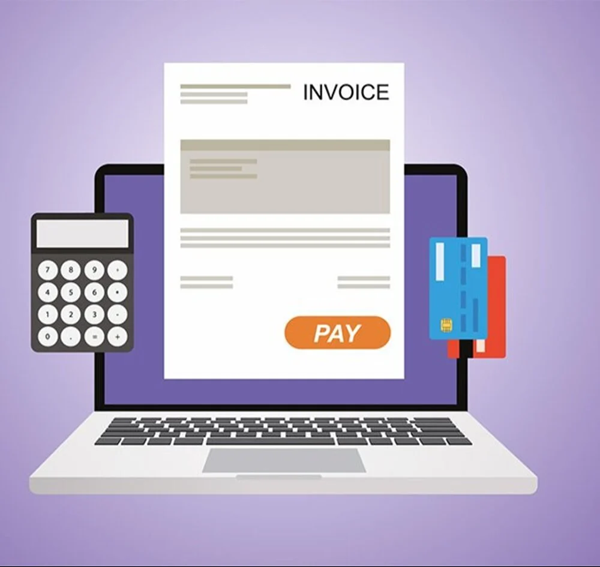
Reliable invoice management is a necessity to run a successful business. However, for many business owners, creating, sending and following up on invoice payments can be a challenging and time-consuming process. Invoicing is critical to maintaining a positive cash flow, so it’s crucial that your business stay on top of sending and collecting invoices.
Check out these four important invoicing tips.
This may sound incredibly obvious, but many businesses simply forget to send out invoices. When your business is busy, it can be a real challenge to find the time to send invoices. Customers aren’t going to proactively follow up to pay you — you need to initiate the transaction by sending an invoice. If you don’t remember to send an invoice you simply won’t be paid for the work you completed! QuickBooks Online is of great help here. It offers a robust system for creating invoices and sending them online. If your Customer also uses QBO, they can directly pay the invoice from the link provided.
If you’re not keeping track of money owed to your business, it could be months before you realize you’re collecting payments late, or worse, missing them entirely. Creating an A/R aging report in QBO to categorize your business’s accounts receivable by the length of time an invoice has been outstanding . Once you have this handy, you will be able to quickly identify accounts that are current, and filter past due payments by the number of days they are overdue. Be proactive and call or email customers shortly after you send the invoice, provide clear payment notices and always follow up until you’re paid.
A clear and detailed invoice is a mark of professionalism and will increase your chances of getting paid the correct amount, on time. QuickBooks Online offers detailed templates for creating invoices. It’s important to make sure every invoice is clear and includes all the necessary information for the transaction to be completed, such as an itemized list of products or services completed, the due date and your accepted payment methods. If your customers are left questioning what they’re paying for or how much they owe, they are more likely to avoid or delay payment.
Digital invoicing like the one offered by QuickBooks Online creates operational efficiencies, saves you money with scalable subscription plans, and makes invoicing easy for you and your customers. Sending invoices instantly enables clients to pay instantly, helping you get paid faster as it offers a varied type of payment methods - Credit and Debit Cards, ACH Bank Transfers, Cash, Checks, Wire Transfer, Digital Wallets and Payment Platforms like PayPal, Apple Pay, Google Pay etc. Plus, you’ll automatically have a backup copy saved in your system for your records.
QuickBooks Payments offers Mobile Invoicing, which is sent from your mobile devices, enabling you to request payments on the go! Allowing you to accept payments via Credit Cards, in turn freeing up your time!
Bottom line, if your business requires you to send invoices, you need to find the method that works for you. Prioritizing your invoice management will save you time, save you money and keep your business’s cash flow healthy! Stilz Bookkeeping provides a one-time robust setup of QuickBooks Online, customized according to the accounting practices to match your business model. Stepping in and taking over & organizing your companies books, ensuring that they are completed in record time!
I am an Intuit Certified Advanced QuickBooks ProAdvisor with their highest level of Certification. Few accountants are able to achieve this level of proficiency. We have a proven track record in persistently pursuing receivables and handling client relationships on the finance side. Contact Us for more information.
Disclaimer: The information provided in this blog is for general informational purposes only. It is not intended as accounting, tax, legal, or other professional advice. You should not act or refrain from acting on the basis of any content in this site without first consulting a financial or tax professional. We are not liable for any potential errors or omissions in this information or for any actions taken based on this information.
